 |
Re-imaging Joseph N. Nicollet's Mapmaking Expeditions |
|
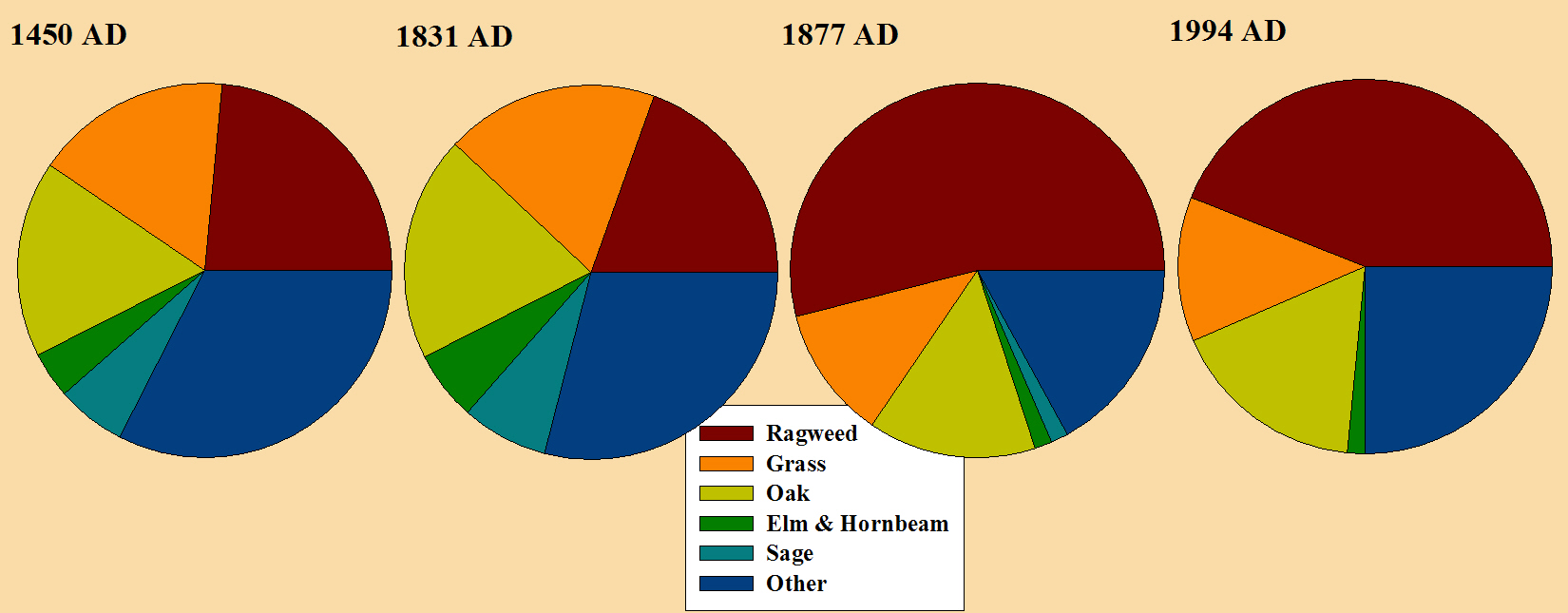
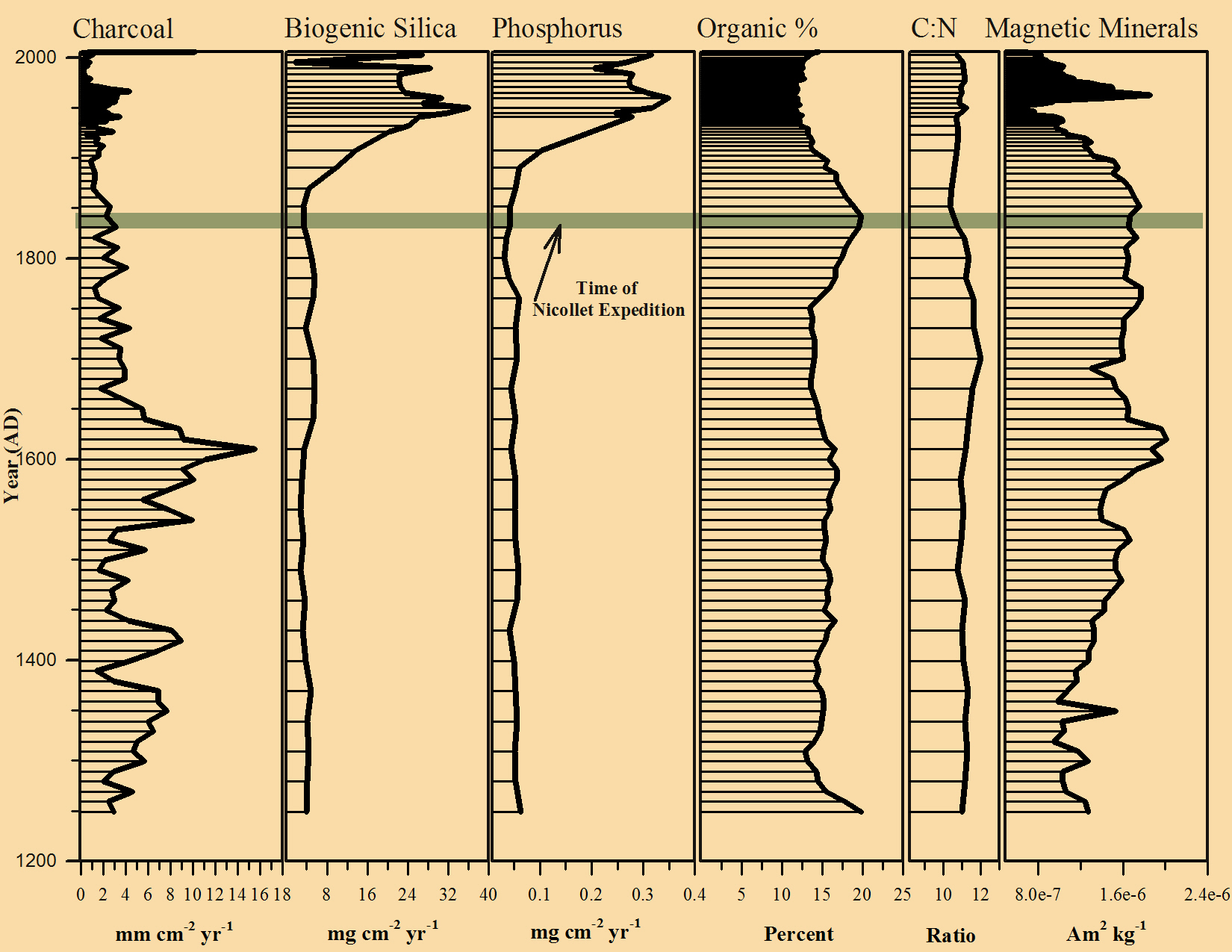
September 27, 1838 Fox (Omanhu Wita) Lake is a large (949 acres) but relatively shallow (max depth 20’) lake. Charcoal was present in the sediments at time of Nicollet’s expedition but ~30% of that observed prior to 1600 AD. The area is relatively flat and few if any firebreaks were present to slow fires. Interestingly, the original name of the lake (Omanhu Wita) means lake means Lake with the Walnut Island according to Geyer who records the presence of a wooded island in the lake. Pollen data suggests an increase in oak trees from 1450 to 1831 that might be the cause (or an effect of) reduced burning. Ragweed pollen shos the biggest change going from about 20% of pollen counted to over 50% pollen with the onset of Euroamerican agriculture in the 1850s and 1860s. Sage pollen, a common marker of prairie, disappears from the most recent samples
The influx of phosphorus and biogenic silica (an indicator of diatom productivity) both increase by nearly an order of magnitude beginning around 1850 AD, consistent with increased fertilization and also possibly warmer temperatures associated with the end of the Little Ice Age and more recently CO2 inputs to the atmosphere. Organic matter concentrations in the sediment vary considerably both before and after Nicollet, but generally decrease after his visit as a result of both more soil eroding into the lake and greater algal productivity (CN is low throughout which marks algae as being source of organic matter) causing calcium carbonate to precipitate (not shown). IRM also drops during following Nicollet, again perhaps due to dilution, with the exception of a clear peak that dates to 1950 AD. Sedimentation rates before and after Nicollet increase only slightly in this lake from approximately 1 cm yr^-1 to 1.2 cm yr-1.
|