
- St. Olaf News
- Features
- For the Media
- Media Relations
- Kari VanDerVeen
- Alumni Hall
- 507-786-3970 office
- 507-412-1036 cell
- vanderve@stolaf.edu
 RSS Feed
You reached this page through the archive. Click here to return to the archive.
Note: This article is over a year old and information contained in it may no longer be accurate. Please use the contact information in the lower-left corner to verify any information in this article.
Professor Gene Bakko, biology students nurture St. Olaf's natural lands
November 6, 2002
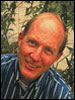 |
| Bakko |
Having just planted several hundred nursery-size trees that will expand Norway Valley, on the southern edge of campus, the biology students and Bakko -- who is curator of the St. Olaf natural lands -- are now converting a 30-acre agricultural plot into forest. Their technique is new and unusual.
"Typically when re-foresting, seedlings are planted," Bakko explains. "This time, we've gathered walnuts, hickory nuts, acorns, ash and other seeds and are dispersing them by hand, then tilling them into the soil using farm equipment." In time, a natural forest will emerge.
Bakko, who is curator of the St. Olaf natural lands, says the college also has received a large natural habitat easement award from the U.S. Fish and Wildlife Service. As a result, St. Olaf will add 100 acres of native prairie to existing natural lands over the next three years.
A grant from the U.S. Fish and Wildlife Service will further Bakko's work. The government program has awarded St. Olaf a Habitat Easement award of $250,000 to restore 100 acres of agricultural land to prairie and wetlands over the next three years. The agreement ensures that this natural habitat will be maintained, with no threat of development by local, state or federal governments, or by the college itself.
The 100 protected acres are adjacent to the current 51-acre prairie, which includes the large pond near Tostrud Center, as well as 10 acres of tree plantings and land northwest of the pond. In addition, St. Olaf received $20,000 from Pheasants Forever, a non-profit organization, to help cover restoration costs.
An area that loses its biodiversity becomes unstable, as species diminish in variety and quantity, Bakko contends. "People tend to equate development with progress," he says. "They see in the rising buildings more business and a thriving economy. However, the wilderness is also a vital part of our collective psyche, and when we lose the land, our quality of life is diminished."


