
- St. Olaf News
- Features
- For the Media
- Media Relations
- Kari VanDerVeen
- Alumni Hall
- 507-786-3970 office
- 507-412-1036 cell
- vanderve@stolaf.edu
 RSS Feed
You reached this page through the archive. Click here to return to the archive.
Note: This article is over a year old and information contained in it may no longer be accurate. Please use the contact information in the lower-left corner to verify any information in this article.
Robert F. Kennedy, Jr. warns of action against 'animal factories'
May 22, 2002
Robert F. Kennedy, Jr., president and founder of Waterkeeper Alliance, appeared at St. Olaf College on Dec. 7, 2001, to address the growing alarm among grassroots organizations about industrial-sized hog, cattle and poultry factories in Minnesota and the Midwest. Addressing a crowd of hundreds in Buntrock Commons, Kennedy described the broad legal assault against these giant animal factories being brought by his organization and its team of private attorneys and law firms.
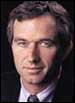 |
| Kennedy, Jr. |
Massive factory farms -- those with at least 1,000 animals -- are a source of environmental contamination and pose a serious threat to family farms as well as to public and animal health, he said. Kennedy warned that corporate livestock producers have enough money and power to influence legislators and state officials. "These producers cannot function without their huge subsidies," he said. "They cannot produce a pork chop cheaper than a family farmer unless they break the law."
That's where his group aims to help family farmers, rural residents and other concerned citizens. "We are launching national litigation against the factory hog industry," said Kennedy, the third child and second son of the late Robert F. Kennedy and Ethel Kennedy.
He decries the business and environmental practices of these large outlets. "By saving money through illegal disposal practices, hog factories have artificially lowered their costs of production, driving thousands of family farmers off the land. These are not businessmen making a buck. They have destroyed thousands of miles of public waterways and aquifers, shattered the lives of tens of thousands of rural Americans and treated millions of animals with unspeakable and unnecessary cruelty. They have used hefty contributions and political clout to insulate themselves from prosecution for their crimes. Now they ought to know that the marshal has come to Dodge."
Kennedy's group, Waterkeeper Alliance, recently won a federal lawsuit against a major North Carolina hog producer. Using North Carolina as an example of a place where state leaders ignored their duty, Kennedy charged that the poisoning of public waterways by factory farms is an environmental problem that has quietly crept into Minnesota.
Industrial hog, cattle and poultry operations are "factories," said Kennedy, not farms. They house thousands of animals, each of which produces two to four times the fecal waste of a person. One industrial "farm" can generate as much waste as the city of New York, yet it is left untreated because the cost to corporate farmers would slash their profits.
Animal waste is piped to open-air pits, some with a surface area of more than 10 acres, and then the sewage is sprayed on fields. "The fields are poison. Nothing can grow on them except crabgrass," said Kennedy. Animals that eat the crabgrass die. The stench from fetid sewage is so bad at times that residents cannot leave their homes or plow their fields.
"Minnesota's average-size family dairy farms, with 60 to 100 cows, are being displaced by 1,000-cow factory feedlots with million-gallon liquid manure basins which endanger the environment," said Don Pylkkanen, director of Minnesota COACT (which stands for Citizens Organized Acting Together). "We deeply appreciate the work of Waterkeeper Alliance, which helps us maintain family dairy farms as an alternative to factory dairy feedlots."
Kennedy's reputation as a defender of the environment stems from a litany of successful legal actions. He has prosecuted governments and companies for polluting the Hudson River and Long Island Sound and sued sewage treatment plants to force compliance with the Clean Water Act. Kennedy serves as president of the Waterkeeper Alliance, chief prosecuting attorney for the Hudson Riverkeeper and senior attorney for the Natural Resources Defense Council.
A graduate of Harvard University who received his law degree from the University of Virginia Law School, Kennedy is also a clinical professor and supervising attorney at the Environmental Litigation Clinic at Pace University School of Law in New York. Earlier in his career he served as New York City's assistant district attorney.
Among those who welcomed Kennedy and Waterkeeper Alliance to St. Olaf were members of the Minnesota Land Stewardship Project, the Rice County Feedlot Front, COACT, the Clean Water Action Alliance for Minnesota and the Animal Welfare Institute. The event was the culmination of a seven-day Whistle Stop tour by Waterkeeper Alliance representatives who are working to form a relationship among lawyers, farm families and rural Americans.
For more information about the Waterkeeper Alliance, visit www.keeper.org.


