
- St. Olaf News
- Features
- For the Media
- Media Relations
- Kari VanDerVeen
- Alumni Hall
- 507-786-3970 office
- 507-412-1036 cell
- vanderve@stolaf.edu
 RSS Feed
You reached this page through the archive. Click here to return to the archive.
Note: This article is over a year old and information contained in it may no longer be accurate. Please use the contact information in the lower-left corner to verify any information in this article.
Historian, zoologist Betty Smocovitis to discuss evolution
September 18, 2008
Betty Smocovitis, professor of history and zoology at the University of Florida, will present two lectures at St. Olaf College on Thursday, Sept. 25, at 11:30 a.m. and 8 p.m. in Regents Hall 150. The lectures, made possible by the Phi Beta Kappa Visiting Scholars Program, are free and open to the public.
The morning lecture, "No Agreement to Separate: G. Ledyard Stebbins and Evolutionary Developmental Genetics, 1959-1973," will look at the work of Ledyard Stebbins, the botanical "architect" of evolutionary synthesis, while exploring the history of scientific controversy.
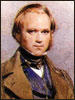 |
| Darwin |
Smocovitis' visit is tied to the 2008-09 academic theme, Science and the Liberal Arts. The theme was established to reflect on relationships between the sciences and other disciplines as the college celebrates the opening of Regents Hall of Natural and Mathematical Sciences this fall.
The lecturer
Smocovitis has been the recipient of six teaching awards during her 20 years at the University of Florida. Her research focuses on the history, philosophy and sociology of the 20th-century biological sciences, especially evolutionary biology, systematics, ecology and genetics; and the history of American botany.
She is author of Unifying Biology: The Evolutionary Synthesis and Evolutionary Biology and of two works in progress: One Hundred Years of the Botanical Society of America and G. Ledyard Stebbins and the Evolutionary Synthesis. Smocovitis has been a visiting professor at the universities of Athens, Cornell, Emory and Stanford, and a visiting research associate at the National Museum and Art Gallery in Papua New Guinea.
Phi Beta Kappa
Founded in 1776, Phi Beta Kappa is the nation's oldest academic honor society. It has chapters at 276 colleges and universities, and more than 600,000 members. Each year the Phi Beta Kappa Visiting Scholar Program makes available 12 or more distinguished scholars who visit 100 colleges and universities with chapters of Phi Beta Kappa.
The purpose of the program is to contribute to the intellectual life of the institution by making possible an exchange of ideas between the Visiting Scholars and the resident faculty and students. Now entering its 53rd year, the Visiting Scholar Program has sent 555 Scholars on 4,651 two-day visits since it was established in 1956.


