
- St. Olaf News
- Features
- For the Media
- Media Relations
- Kari VanDerVeen
- Alumni Hall
- 507-786-3970 office
- 507-412-1036 cell
- vanderve@stolaf.edu
 RSS Feed
You reached this page through the archive. Click here to return to the archive.
Note: This article is over a year old and information contained in it may no longer be accurate. Please use the contact information in the lower-left corner to verify any information in this article.
Think big, work small: Scientists to present exciting discoveries in nanoscience May 3
April 17, 2002
NORTHFIELD, Minn. - Nanoscience may one day make it possible for scientists to shrink the entire contents of the Library of Congress into a device the size of a sugar cube; or develop materials that are 10 times stronger than steel, but at a fraction of the weight making all kinds of land, sea, air and space vehicles lighter and more fuel-efficient; or remove the finest contaminants from water and air to promote a cleaner environment and potable water.
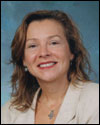 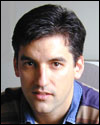 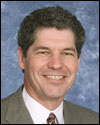 Scientists Naomi Halas, Christopher Monroe and Michael Ramsey will speak at the symposium. |
The implications of nanoscience will be discussed by nationally known scientists during the St. Olaf College science symposium, "Big Questions, Small-Scale Solutions: New Frontiers in Nanoscience," Friday, May 3. The symposium, from 9 a.m. to 8:30 p.m. in the St. Olaf Science Center and Buntrock Commons, is free and open to the public.
The symposium brings three renowned scientists to St. Olaf to present exciting innovations and discoveries in nanoscience, a new area of research with strong government funding through the National Nanotechnology Initiative. Nanoscience research and development is motivated by the potential for economic return and social benefit, including continued improvement in electronics/electrooptics for information technology; higher-performance, lower-maintenance materials for manufacturing, defense, space and environmental applications; and accelerated biotechnology advances in medical, health care and agriculture.
"This new science studies materials and systems whose structures or components exhibit novel and significantly improved properties, phenomena and processes due to their very small size," says Paul Jackson, assistant professor of chemistry at St. Olaf. "The diameter of a single human hair, 20 to 200 micrometers, is roughly a thousand times larger than the range of nanostructures.
"Our speakers will describe quantum computing and its implications for faster processing speeds and greater data storage capacity, nanofluidics and how these tiny devices may serve as sensors for chemical and biological agents, and nanophotonics, the ability to design small scale structures that manipulate, trap, or generate light."
Rice University, one of the national centers for nanoscience research, is represented by Naomi J. Halas, professor of electrical and computer engineering and professor of chemistry. Halas will describe nanoparticle systems involved in manipulating, trapping or generating light, and the pitfalls and possible applications of these materials. Her lecture, "Nanoshells: Nanotechnology for the Real World," is at 2:15 p.m. in Room 280 of the St. Olaf Science Center.
University of Michigan Associate Professor in Physics Christopher Monroe will share his insights about how a future generation of computers will store and process information using individual atoms or ions, leading to an exponential increase in speed over today's computers. His lecture, "Building a Quantum Computer Atom by Atom," is at 3:30 p.m. in Room 280 of the St. Olaf Science Center.
J. Michael Ramsey, corporate research fellow and leader of the laser spectroscopy and chemical microtechnology group, chemical sciences division, at Oak Ridge National Laboratory, explores the transport of fluids through fabricated nanoconduits - the means by which our bodies move fluid and accompanying molecules to specific locations - in terms of how these systems function on this small scale. His lecture, "Nanofluidics: Molecular Transport in Confined Spaces," is at 7:30 p.m. in Room 280 of the St. Olaf Science Center.
Closing remarks will be given by Wesley Pearson, St. Olaf professor of chemistry and Hardy distinguished professor of natural sciences, and David Van Wylen, St. Olaf professor of biology and associate dean of the faculty of natural sciences and mathematics.
In addition to the three plenary lectures, St. Olaf student scientists will present their research, covering a wide range of areas including molecular biology, surface chemistry, atomic structure, paleo-ecology and applied mathematics. The posters explaining this research is on display throughout the symposium in the Crossroads of Buntrock Commons and exhibited Saturday morning, May 4.
This is the third annual science symposium and is sponsored by the college's natural sciences and mathematics faculties. High school and college students, their teachers and the public are encouraged to attend the symposium, held in conjunction with the college's Honors Day, which cites St. Olaf students for scholastic achievement.
The symposium is intended to highlight undergraduate research in biology, chemistry, mathematics, physics, psychology and related subjects; to provide opportunities for the entire college to examine a topic of recent scientific research; and to let students, faculty members and the public meet and talk with distinguished researchers.
The Paul and Mildred Hardy Distinguished Professorship in the Sciences is funding the event, as is a gift from Madeline Jacobs, editor in chief of Chemical and Engineering News. For additional information about the science symposium, speakers and the schedule of events, visit www.stolaf.edu/sciencesymposium.
St. Olaf College, a national leader among liberal arts institutions, fosters the development of mind, body and spirit. It is a residential college in Northfield, Minn., and affiliated with the Evangelical Lutheran Church in America (ELCA). The college provides personalized instruction and diverse learning environments, with more than two-thirds of its students participating in international studies.


